


What is the 3 to 1 rule for scaffolding?
The 3:1 height-to-width ratio safety rule in scaffolding construction is a core safety principle that ensures the stability of freestanding scaffolding and prevents it from tipping over. This rule is widely followed in construction projects both domestically and internationally.
1. Core Definition:
For freestanding scaffolding (scaffolding not braced or fixed to walls or other building structures), the ratio of the total height of the scaffold to the width of its narrowest base must be controlled within 3:1. Simply put, for every 3 units of height, the minimum width of the base must be at least 1 unit. For example, if the narrowest base width is 2 meters, the maximum height of the scaffolding should not exceed 6 meters; if the narrowest base width is 1 meter, the height should not exceed 3 meters.
2. Applicable Scenarios and Supplementary Requirements:
This rule is particularly crucial for freestanding scaffolding, which relies entirely on its own base for stability. The 3:1 ratio ensures that the center of gravity always remains within the base area. In actual construction, if the height-to-width ratio of the scaffolding exceeds 3 due to project requirements, additional anti-tilting measures must be taken, such as installing bracing, guy wires, or making rigid connections to existing building structures. For example, in construction, the regulations for clamp-type and ring-lock steel pipe support scaffolding clearly require that the height-to-width ratio of freestanding structures not exceed 3; otherwise, reinforcement measures must be added.
3. Core Function:
This ratio provides a basic safety margin for the scaffolding, effectively resisting external forces such as wind and movement of construction personnel, preventing the scaffolding from tipping over or collapsing due to a shift in the center of gravity, and thus ensuring the safety of personnel working at heights.
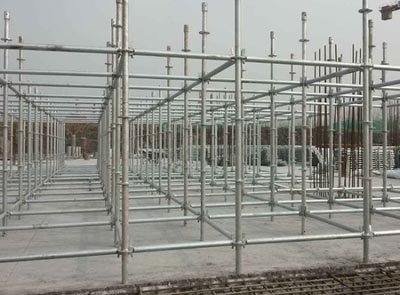
The theoretical basis for the 3:1 height-to-width ratio rule in scaffolding construction stems from the principles of center of gravity stability and overturning moment equilibrium in structural mechanics. It is a crucial design criterion for ensuring that independent scaffolding does not tip over under its own weight, construction live loads, and wind loads.

