


What are scaffolders
History of scaffolding
The history of scaffolding can be traced back to ancient Egypt, Greece and Rome, when people used wood and ropes to build simple scaffolding to build large buildings such as pyramids and temples. For example, the construction of the pyramids of Giza in Egypt may have relied on wooden platforms and ramp structures. The main material is wood, which is more complex, but less safe and has more accidents.
Starting in the 19th century, cast iron and steel parts gradually replaced wood, improving strength and durability. The first steel pipe scaffolding was designed by Daniel Palmer Jones in the UK in 1913 and became the prototype of modern scaffolding. Countries such as the UK began to formulate safety regulations to reduce accidents.
What is Scaffolding?
Scaffolding is a temporary structure used to support workers and materials so that work at height can be done safely and efficiently during building, repair, or construction.
Main uses:
- Construction (such as wall building, painting, installation of glass curtain walls, etc.)
- Construction of large projects such as bridges, factories, stages, etc.
- Equipment installation, exterior wall cleaning, maintenance and other high-altitude operations
Basic components:
- Vertical poles (vertical support)
- Crossbars (horizontal connection)
- Diagonal braces (to enhance stability)
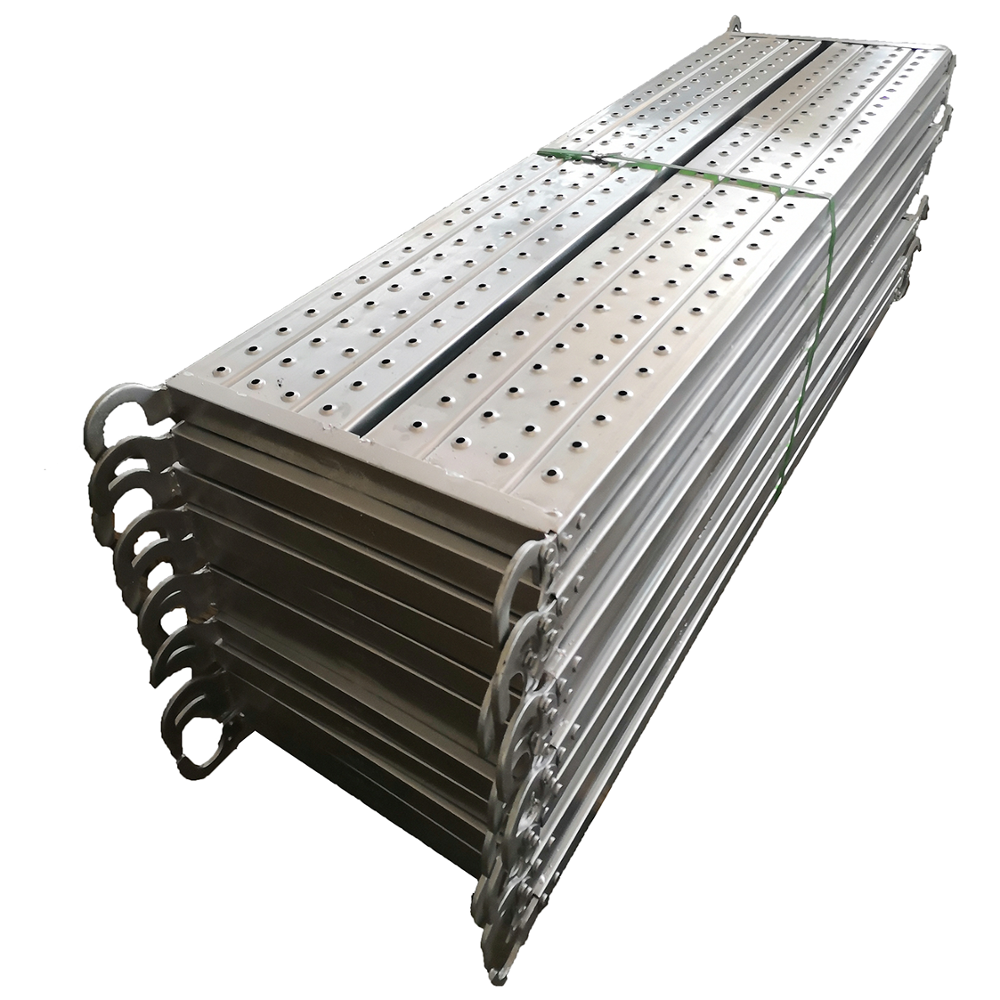
- Scaffolding (working platform)
- Protective facilities (such as safety nets, guardrails)
Common types:
- Steel pipe fastener type: traditional scaffolding, connected with steel pipes and fasteners, flexible but slow to set up.
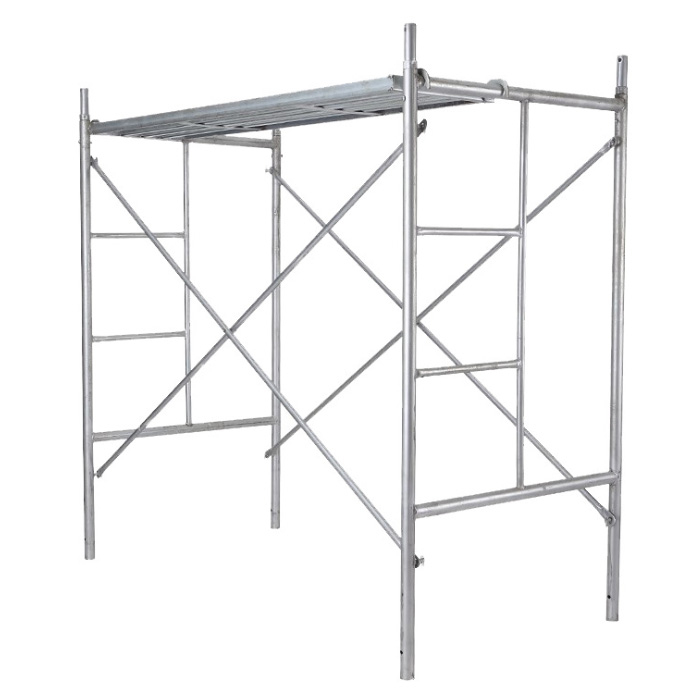
- Portal scaffolding: modular design, quick installation, suitable for low-level operations.
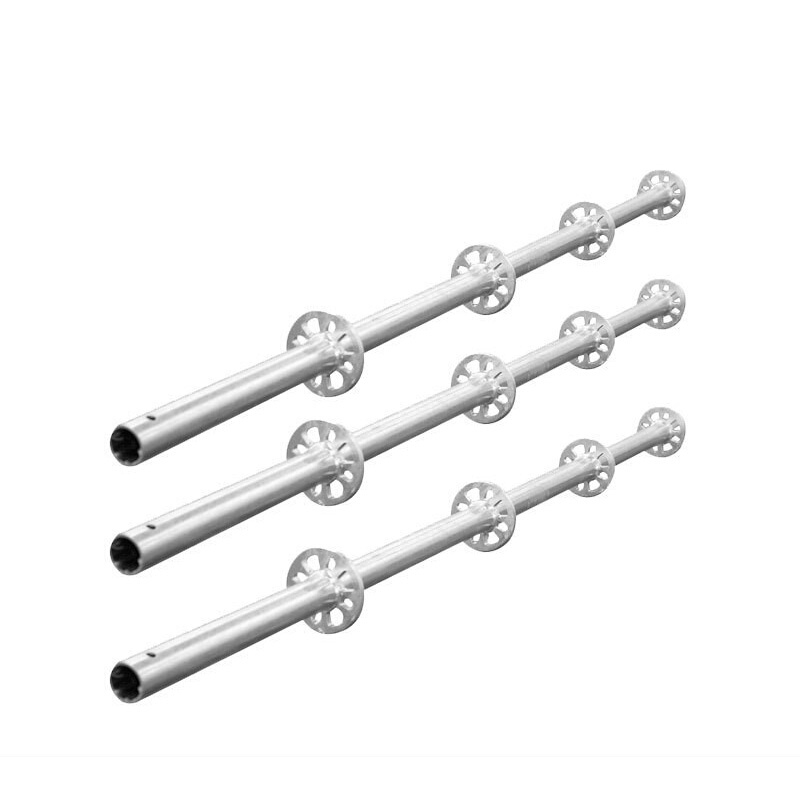
- Disc-type scaffolding: pin-type connection, stable and efficient, widely used in large-scale projects.
- Cantilever scaffolding: fixed on the outer edge of the building, used for high-rise construction.
- Mobile scaffolding: with wheels, can be flexibly moved, suitable for indoor decoration.
Safety requirements:
- Must be stable to prevent tilting or collapse
- Workers must wear safety belts
- Regular inspection to avoid overloading
Simply put, scaffolding is a “temporary workbench” during construction, ensuring that workers can work safely at heights.
Benefits of Scaffolding!
Scaffolding is an indispensable auxiliary facility in construction and has the following main advantages:
- Improve construction safety
- Provide a stable working platform to prevent workers from falling from heights.
- Equip with protective measures such as guardrails and safety nets to reduce the risk of accidents.
- Reduce the dangers caused by climbing and hanging operations.
- Improve construction efficiency
- Workers can move freely, which is convenient for wall construction, painting, welding and other operations.
- It can accommodate multiple people at the same time to speed up the progress of the project.
- Modular design (such as disc-type and door-type scaffolding) can be quickly disassembled and assembled, saving time.
3.Adapt to various construction needs
- Can be used in different scenes such as buildings, bridges, stages, factories, etc.
- Adjustable height and width to adapt to different construction environments.
- Special types (such as cantilevered and mobile) meet specific needs such as high-rise and indoor.
- Reduce costs
- Reusable, reducing material waste (more economical than temporary wooden frames).
- Reduce compensation and downtime losses caused by high-altitude work accidents.
- Some scaffolding (such as aluminum alloy) is light in weight and has lower transportation and installation costs.
- Ensure construction quality
- Provide stable support to ensure construction accuracy (such as wall flatness).
- It is convenient for workers to check and correct construction details and improve construction quality.
- Environmental protection and sustainability
- Modern scaffolding uses recyclable materials (such as steel and aluminum alloy) to reduce resource waste.
- Modular design reduces construction waste and is in line with the trend of green buildings.
Dangers of working on scaffolding!
Although working on scaffolding can improve construction efficiency, there are still many safety hazards, mainly including the following types of dangers:
- Falling from height (most common hazard)
Causes: not wearing a safety belt, no guardrails on the scaffolding, broken or unfixed scaffolding, workers stepping on empty space, etc.
Consequences: serious injuries or even death.
- Scaffold collapse
Reasons:
- Overload (too many materials or too many people).
- Unstable foundation (such as soft ground, improper support).
- Structural defects (loose fasteners, large spacing between poles).
Consequences: Mass casualties.
3.Object strike
Reasons:
- Tools or materials fall from the scaffold.
- Objects thrown from high places (if no protective net or baffle is set up).
Consequences: Injury to people or workers below.
4.Risk of electric shock
Reasons:
- The scaffold is close to high-voltage wires (metal scaffolds are easy to conduct electricity).
- When using power tools, the wires are damaged or the wiring is illegal.
Consequences: Electric shock casualties.
5.Unstable movement or tilt
Reasons:
- The wheels of the mobile scaffolding were not locked.
- The scaffolding was not reinforced in strong winds.
Consequences: Workers were injured when the scaffolding fell.
6.Material defects or aging
Reasons:
- Using rusted, deformed steel pipes or broken scaffolding boards.
- Poor-quality fasteners and connectors are broken.
Consequences: Sudden structural failure leading to accidents.
7.Influence of adverse environment
Reasons:
- Rainy and snowy weather makes the scaffolding slippery.
- Extreme weather such as strong winds and lightning increase the risk.
Consequences: Slip, fall or scaffolding blown down.
Purpose of scaffolding!
As an important auxiliary facility for construction, scaffolding is widely used in the following scenarios:
- Construction
- Wall construction: providing a work platform for brickwork and concrete pouring.
- External wall decoration: painting, tiling, curtain wall or insulation installation.
- Structural construction: supporting formwork, pouring beams, columns or floor slabs.
- Repair and maintenance
- House repair: repairing cracks in external walls and replacing damaged components.
- Equipment installation: erection and maintenance of air conditioners, billboards, and pipelines.
- High-altitude cleaning: cleaning of glass curtain walls and external walls.
- Industrial and infrastructure construction
- Bridge construction: casting and welding of supporting bridge piers and box beams.
- Plant construction: steel structure installation, roof construction.
- Electricity/petrochemical: construction and maintenance of chimneys, storage tanks, and transmission towers.
- Temporary facility construction
- Stage/stand: temporary frame for concerts and sports events.
- Exhibition scenery: supporting structure of large exhibition stands and lighting racks.
- Disaster relief: high-altitude rescue channels after earthquakes and fires.
- Interior decoration
- Ceiling construction: ceiling installation, lighting wiring.
- Wall treatment: high-rise interior painting, mural painting.
- Mobile operation: wheeled scaffolding is convenient for flexible adjustment of position.
Alternatives to scaffolding!
Although scaffolding is a common equipment in aerial work, in some scenarios, more efficient, safer or more economical alternatives can be used. The following are several common alternatives:
- Aerial work vehicle (lifting platform)
Applicable scenarios:
- Short-term aerial work such as exterior wall maintenance, equipment installation, billboard hanging, etc.
- Tasks that require frequent movement or height adjustment.
Advantages:
✔Quick lifting and lowering, saving construction time.
✔Flexible movement, suitable for narrow or complex spaces.
✔Built-in guardrails and safety devices to reduce the risk of falling.
Disadvantages:
❌Limited height (generally no more than 50 meters).
❌High cost, suitable for short-term rental rather than long-term use.
Common types: scissor lift, articulated boom lift, spider lift (suitable for indoor use).
- Suspended work platform
Applicable scenarios:
- Exterior wall cleaning, paint application, curtain wall installation of high-rise buildings.
- Maintenance of vertical surfaces such as bridges and chimneys.
Advantages:
✔ Suitable for super-high-rise operations (up to 100 meters or more).
✔ Occupies little ground space and does not affect ground traffic.
✔ Can carry multiple people working at the same time.
Disadvantages:
❌ Depends on the anchor point at the top of the building, and the installation is complicated.
❌ Affected by wind, work must be stopped in bad weather.
- Mobile workbench (aluminum alloy quick-install platform)
Applicable scenarios:
- Indoor decoration, ceiling construction, lighting installation.
- Short-term work in low-rise buildings (generally <10 meters).
Advantages:
✔ Lightweight and easy to carry, quick to assemble.
✔ With locking wheels, movable and stable.
✔ Saves more space than traditional scaffolding.
Disadvantages:
❌ Limited load-bearing capacity and height, not suitable for large projects.
- Drone + Robot (Future Trend)
Applicable scenarios:
- Automated operations such as exterior wall inspection, cleaning, and spraying.
- Inspection in hazardous environments (such as chemical plants and near high voltage electricity).
Advantages:
✔No need for manual high-altitude operations, high safety.
✔High efficiency, can accurately perform repetitive tasks.
Disadvantages:
❌The technology is not yet fully mature and the cost is high.
❌Complex operations still require manual intervention.
- Temporary steel structure support (replacing some scaffolding functions)
Applicable scenarios:
- Heavy support requirements such as large steel structure installation and bridge construction.
Advantages:
✔ Strong load-bearing capacity and high stability.
✔ Customizable design to adapt to complex structures.
Disadvantages:
❌ Installation and disassembly take a long time.
❌ High cost, suitable for large projects.
- How to choose an alternative?
| Factors | Recommended solutions |
| Short-term, flexible operations | Aerial work vehicle/mobile work platform |
| Ultra-high-rise construction | Gondola |
| Automation requirements | UAV/robot |
| Heavy support | Temporary steel structure |
Although scaffolding is universal, alternatives such as aerial work vehicles, hanging baskets, and mobile platforms can meet specific needs more efficiently and safely. In the future, with the development of automation technology, drones and robots may gradually replace some manual aerial work. When choosing, you need to consider cost, efficiency, safety, and working environment.
Related products
 |
 |
 |

